How AI Understands Your Prompts (A Non-Technical Explanation)
You type "a cat wearing a tiny hat." Seconds later, there's an image of exactly that. How does the AI know what a cat looks like? How does it understand "tiny" or "wearing"? Let me explain without getting too technical.
The AI Learned by Looking at Billions of Pictures
Before you ever typed a prompt, the AI spent months studying images. Not casually looking — intensely analyzing. It looked at billions of pictures, each with descriptions or labels attached.
A photo labeled "cat sitting on couch" taught it what cats look like and what "sitting" means visually. Millions of similar images reinforced these patterns. Over time, the AI built an internal "understanding" of how words relate to visuals.
It Doesn't Actually "See" — It Recognizes Patterns
Here's the weird part: the AI doesn't know what a cat is. It has no concept of "cat" the way you do. What it knows is that when images have certain patterns of pixels — certain shapes, colors, textures — they're often labeled "cat."
When you type "cat," the AI looks for those patterns it learned and tries to recreate them. It's incredibly sophisticated pattern matching, not understanding in the human sense.
Words Get Turned Into Numbers
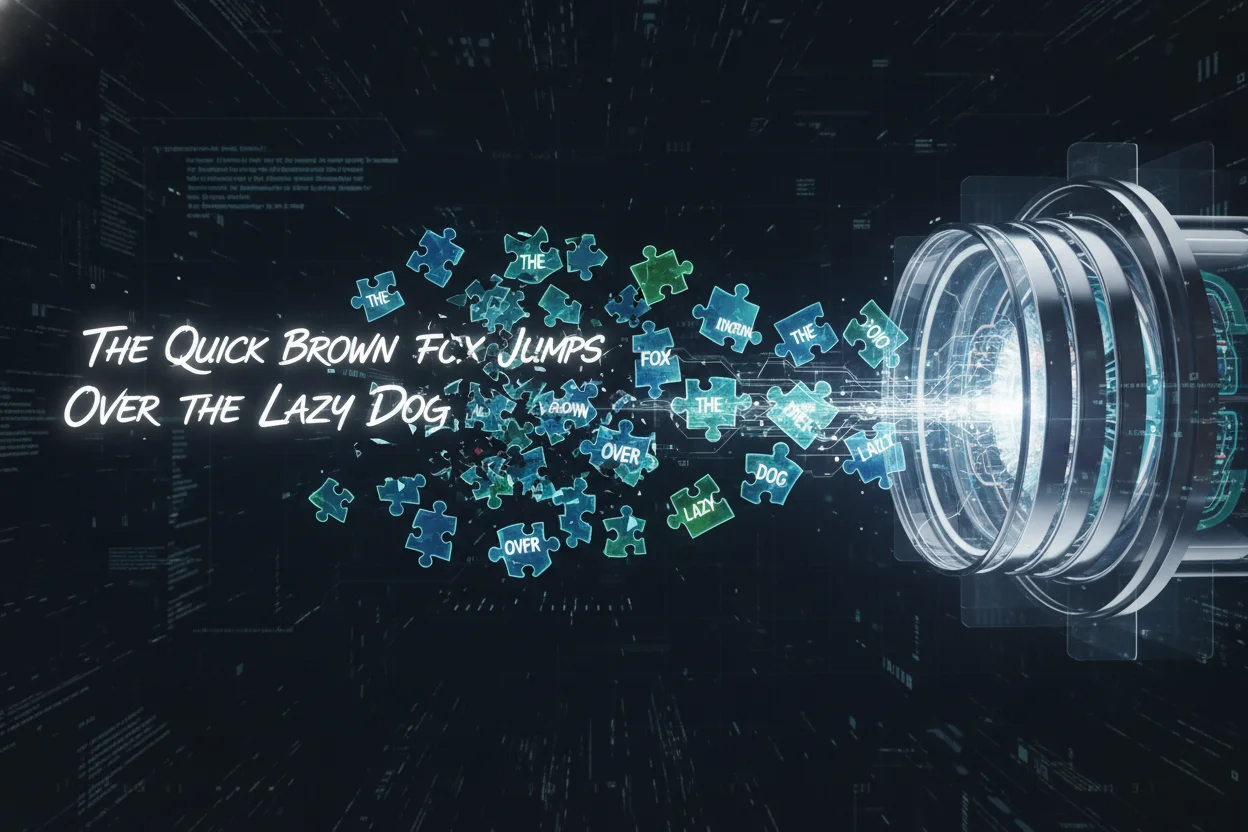
Computers don't understand words, so your prompt gets converted into numbers. Each word becomes a list of values that capture its "meaning" relative to other words.
Words with similar meanings end up with similar numbers. "Happy" and "joyful" have number lists that are close together. "Happy" and "refrigerator" are far apart. This lets the AI work with concepts even though it only sees numbers.
The Image Builds Up From Noise

Here's the cool part. The AI starts with random noise — like TV static. Then it gradually refines that noise into an image, step by step, guided by your prompt.
Think of it like a sculptor starting with a rough block and slowly revealing the statue inside. Each step makes the image clearer and more aligned with what you asked for. This process typically happens in 20-50 steps, each taking a fraction of a second.
Why It Sometimes Gets Things Wrong
Understanding how AI works also explains its failures. The AI learned from imperfect data. If most labeled images of "doctors" showed men, the AI learned that pattern — even though it's not accurate.
Similarly, if the AI rarely saw images of "a person with three arms," it doesn't know what that should look like. It might awkwardly merge what it knows about arms, often with strange results.
Why Word Order Matters
Earlier words in your prompt often have more influence than later ones. The AI pays more attention to the beginning. This is why putting your main subject first usually gives better results than burying it in a long description.
It's not a hard rule — the AI considers everything — but front-loading important details tends to work better.
Why This Matters for Your Prompts
Understanding how AI thinks helps you communicate with it better. The AI isn't reading your mind — it's matching patterns. Be specific about visual details because that's what the AI actually produces. Abstract concepts work when they connect to visual patterns the AI has learned.
"A feeling of nostalgia" is hard for the AI. "Faded polaroid photo with warm, yellowed tones" is easy. Describe what nostalgia looks like, not what it feels like.