AI Art vs Traditional Art: Complete Comparison
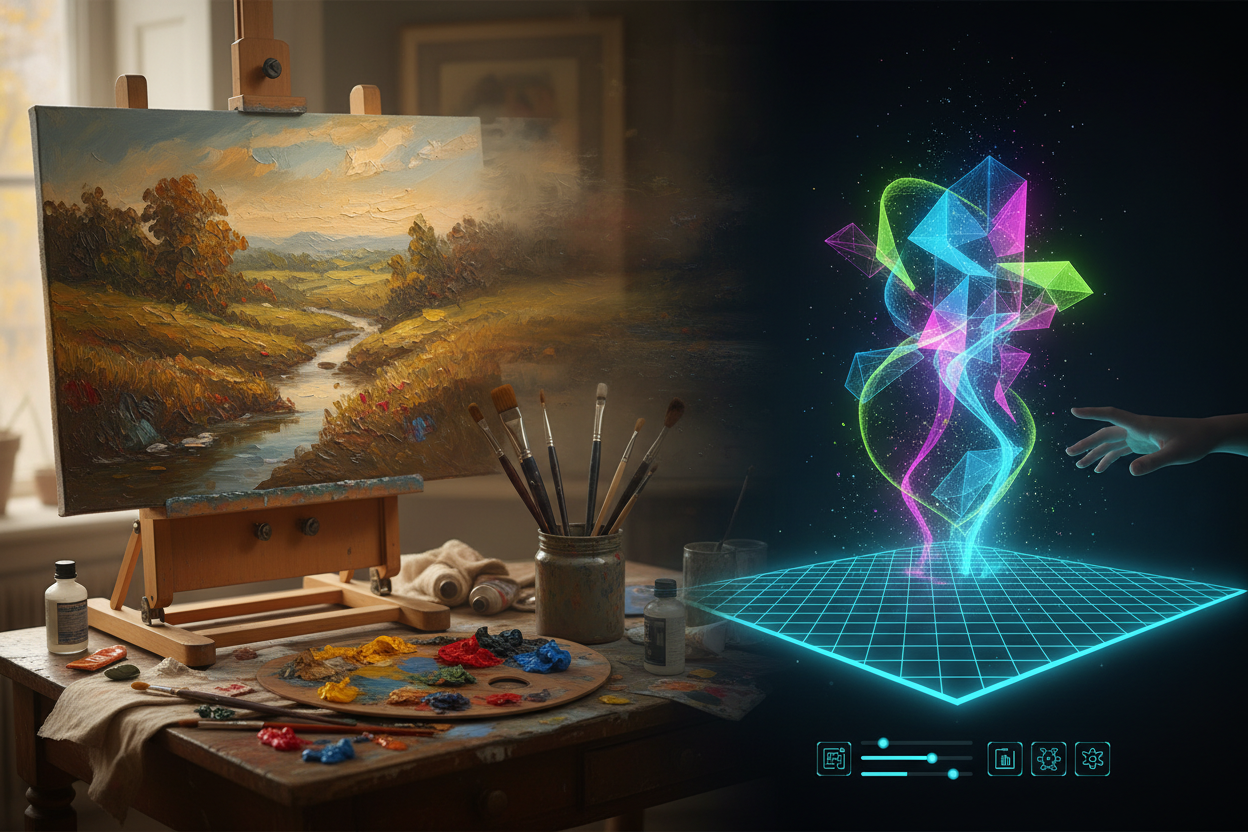
The rise of AI image generation has sparked intense debate in the art world. Is AI-generated artwork "real" art? How does it compare to traditional methods? In this comprehensive analysis, we'll explore both approaches across multiple dimensions to help you understand when each excels and how they can complement each other.
Defining the Terms
Before comparing, let's clarify what we mean by each term. Traditional artencompasses human-created works using conventional methods: painting, drawing, sculpture, photography with manual editing, and digital art created stroke-by-stroke in programs like Photoshop or Procreate.
AI art refers to images generated by artificial intelligence models trained on vast datasets of existing artwork. The user provides text prompts or reference images, and the AI generates new images based on learned patterns. This includes tools like DALL-E, Midjourney, Stable Diffusion, and Bladdit's free image generator.
Speed and Efficiency
⚡ AI Art
Time: Seconds to minutes
Generate dozens of variations in the time it takes to write a few prompts. Ideal for rapid prototyping, concept exploration, and high-volume projects.
Traditional Art
Time: Hours to months
A detailed illustration might take days. An oil painting could take weeks or months. The time investment is part of the artistic process and value.
Winner: AI clearly wins on speed. However, speed isn't always the goal — the meditative process of creating traditional art has its own intrinsic value.
Creative Control
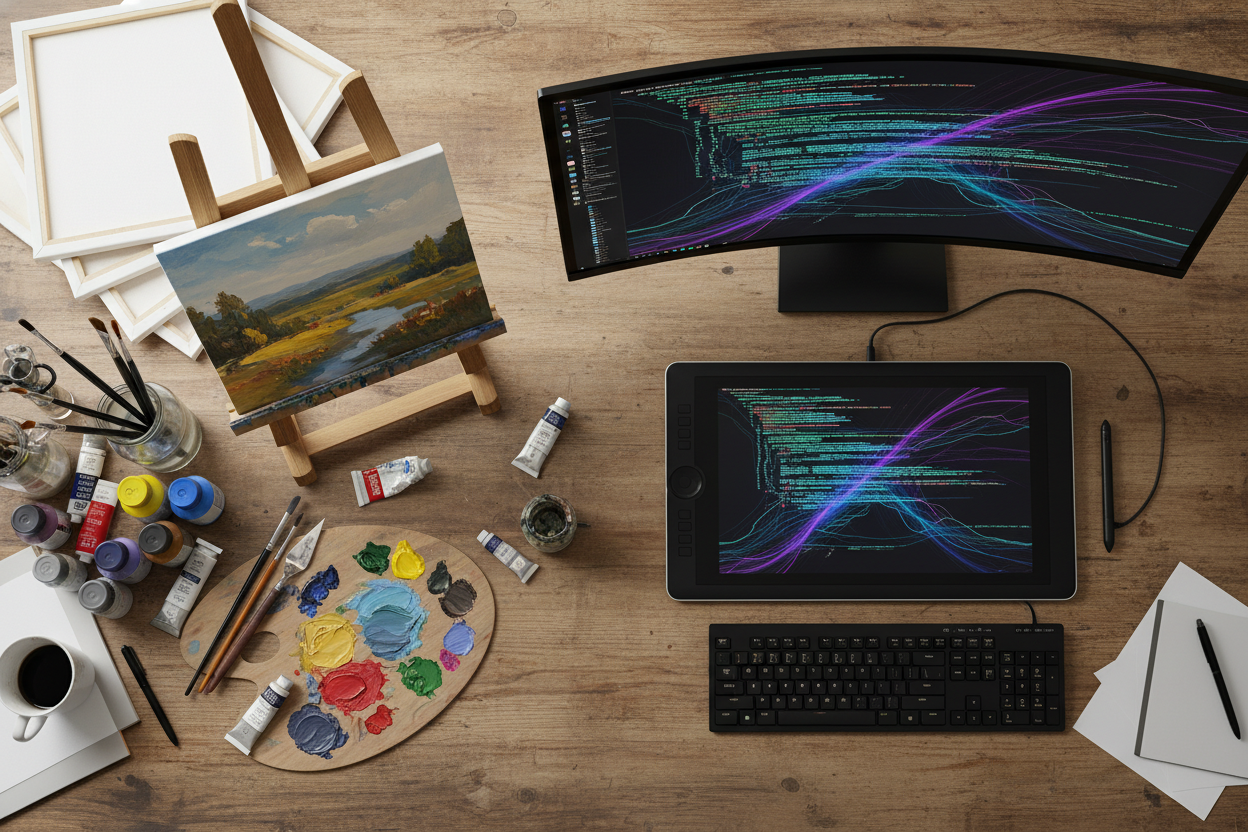
This is where the comparison gets nuanced. Traditional artists have complete pixel-level control over every aspect of their work. Every brushstroke is intentional. Every color choice is deliberate.
AI art offers a different kind of control — through language. You describe what you want, and the AI interprets your words. This can lead to surprising, serendipitous results, but it can also be frustrating when the AI doesn't quite capture your vision.
Control Spectrum
Skill Requirements
- •Traditional Art: Years of practice to develop technical skills. Understanding of anatomy, perspective, color theory, composition. Mastery of chosen medium (paint, digital tools, etc.).
- •AI Art: Understanding of prompt engineering. Knowledge of art terminology and styles. Familiarity with the specific AI tool. Curatorial skills to select best outputs.
AI art has a much lower barrier to entry, which democratizes creation. However, creating excellent AI art still requires skill — just different skills than traditional methods.
Cost Comparison
| Factor | Traditional | AI |
|---|---|---|
| Initial Investment | $100 - $2000+ | $0 - $50/month |
| Per Piece Cost | Hours of labor + materials | Pennies to free |
| Learning Curve | Years of practice | Days to weeks |
| Scalability | Limited by time | Nearly unlimited |
Originality and Uniqueness
Traditional art is inherently unique. Even prints of the same work differ slightly. An original oil painting is one-of-a-kind and carries the physical marks of its creator.
AI art is infinitely reproducible, but interestingly, each generation is unique — the same prompt rarely produces identical results. However, because AI learns from existing artwork, critics argue AI images sometimes lack true originality, instead recombining learned patterns.
Emotional and Cultural Value
Traditional art often carries deep emotional significance. The provenance of a piece — who created it, when, and why — contributes to its value. A painting made by a loved one or a historical figure has meaning beyond its visual appeal.
AI art is still developing its cultural position. While it can be visually stunning, it doesn't (yet) carry the same historical or emotional weight. This may change as AI art develops its own history and notable creators emerge.
When to Use Each Approach
Use AI Art For:
- • Rapid concept exploration
- • Marketing and social media content
- • Prototyping before commissioning
- • High-volume content needs
- • Budget-conscious projects
- • Learning artistic styles
Use Traditional Art For:
- • One-of-a-kind originals
- • Emotional/personal significance
- • Complete creative control
- • Physical display (galleries, homes)
- • Building artistic skills
- • Therapeutic/meditative creation
The Best of Both Worlds
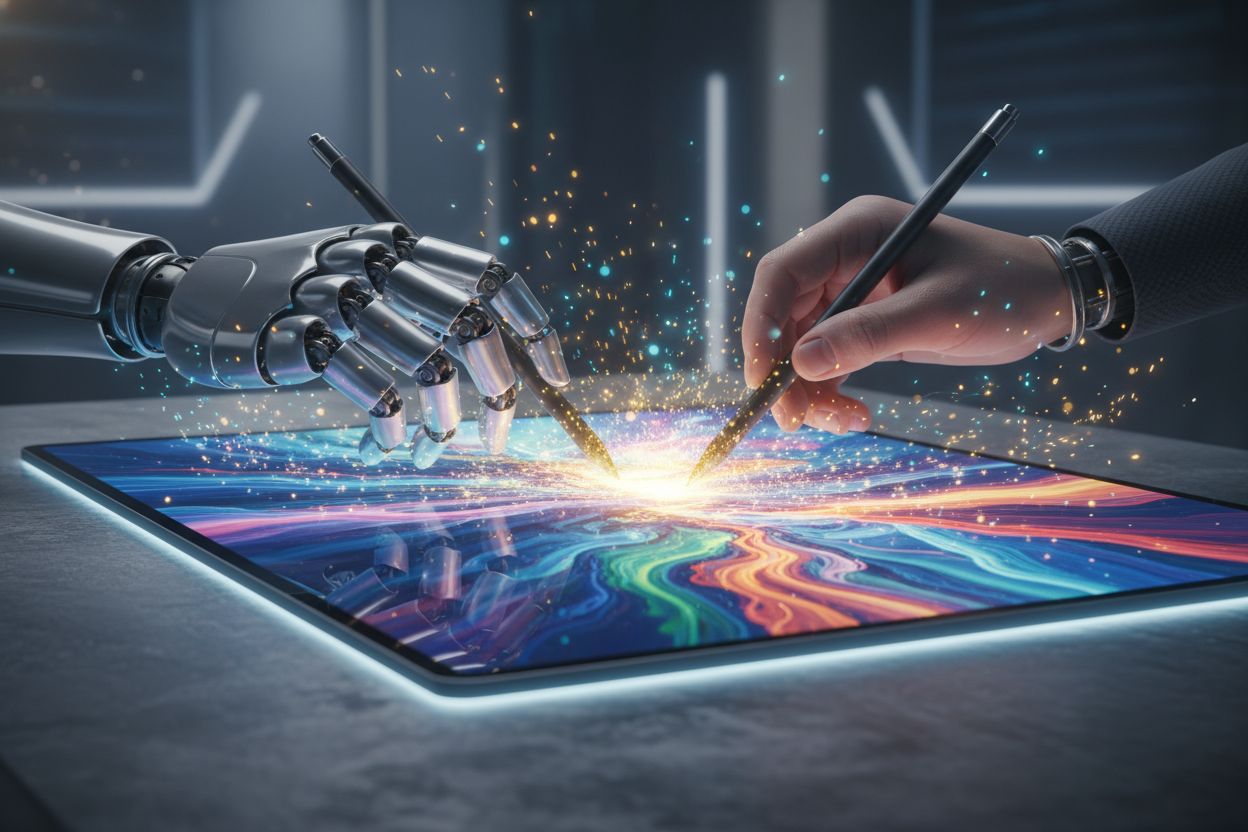
The smartest creators are combining both approaches. Use AI to generate concepts and references, then execute the final piece traditionally. Or start with a traditional sketch and use AI to explore color variations or backgrounds.
Rather than viewing AI and traditional art as competitors, consider them complementary tools in an expanded creative toolkit. The future of art likely involves thoughtful integration of both human creativity and AI capabilities.
Explore AI Art Creation
Discover what AI art can do for your creative projects — completely free.
Try AI Art Free →